

Does Hypochlorous Acid Lose Potency Over Time?
Let's get straight to the answer: YES. Hypochlorous acid (HOCl) can lose potency over time and for most products on the market, it happens faster than you'd expect. Whether your HOCl skincare is still working a month after opening depends almost entirely on how it was formulated. Here's what you need to know.
Why Hypochlorous Acid Stability Is So Hard to Achieve
Hypochlorous acid (HOCl) is a naturally occurring molecule produced by your own immune system to fight bacteria and calm inflammation. In skincare, it's one of the most effective and gentle ingredients available, but it comes with a significant challenge: HOCl stability is inherently difficult to maintain.
HOCl exists in a delicate chemical balance. Exposure to light, air, temperature changes and pH shifts can all cause it to break down, converting into compounds that are far less effective or inactive altogether. This isn't a flaw unique to one brand. It's a fundamental property of the molecule itself.
Many HOCl products that look and smell perfectly fine may have lost a significant portion of their active concentration by the time they reach you—or within weeks of opening.
How Long Does Hypochlorous Acid Last?
We independently tested several HOCl products on the market, measuring their pH and active HOCl concentration (in parts per million or PPM) within one week of receiving them and again 30 days later.
The results were eye-opening:
Several popular HOCl brands started with strong concentrations — some as high as 173 to 181 PPM. But within 30 days had dropped to as low as 14 PPM. One product tested at 0 PPM active HOCl at both time periods, meaning it had no measurable active ingredient at all.
pH instability was just as dramatic. Multiple hypochlorous acid products dropped by 1 to 3 pH points over 30 days—a shift significant enough to change how the formula interacts with your skin.
For context: HOCl works optimally at a pH close to your skin's natural level (around 5.5). A formula that drifts significantly from that range isn't just less effective, it can potentially cause irritation on sensitive skin (think barrier damage).
Why Most HOCl Brands Struggle With Potency Over Time
There are a few reasons HOCl stability is so difficult to achieve consistently:
Manufacturing process: HOCl is typically produced through electrolyzed water technology. The quality, consistency and purity of that process directly impacts how stable—and how long lasting—the final product is. Not all manufacturers produce HOCl at the same standard.
Packaging: HOCl degrades faster when exposed to air and light. Packaging that allows repeated air exposure—like open top jars or low quality pump bottles—accelerates breakdown and shortens the shelf life significantly.
Added stabilizers: Some brands attempt to solve the HOCl stability problem by adding chemical stabilizers. These can extend shelf life on paper, but introduce additional ingredients that may not be skin-friendly and can affect how the HOCl itself performs.
pH management: Keeping HOCl stable requires careful pH control throughout manufacturing and packaging. Small deviations during production can set off a chain reaction of degradation before the product even reaches a shelf.
How LUMION skin Solved the HOCl Stability Problem
At LUMION skin, hypochlorous acid stability isn't an afterthought—it's the foundation of everything we make.
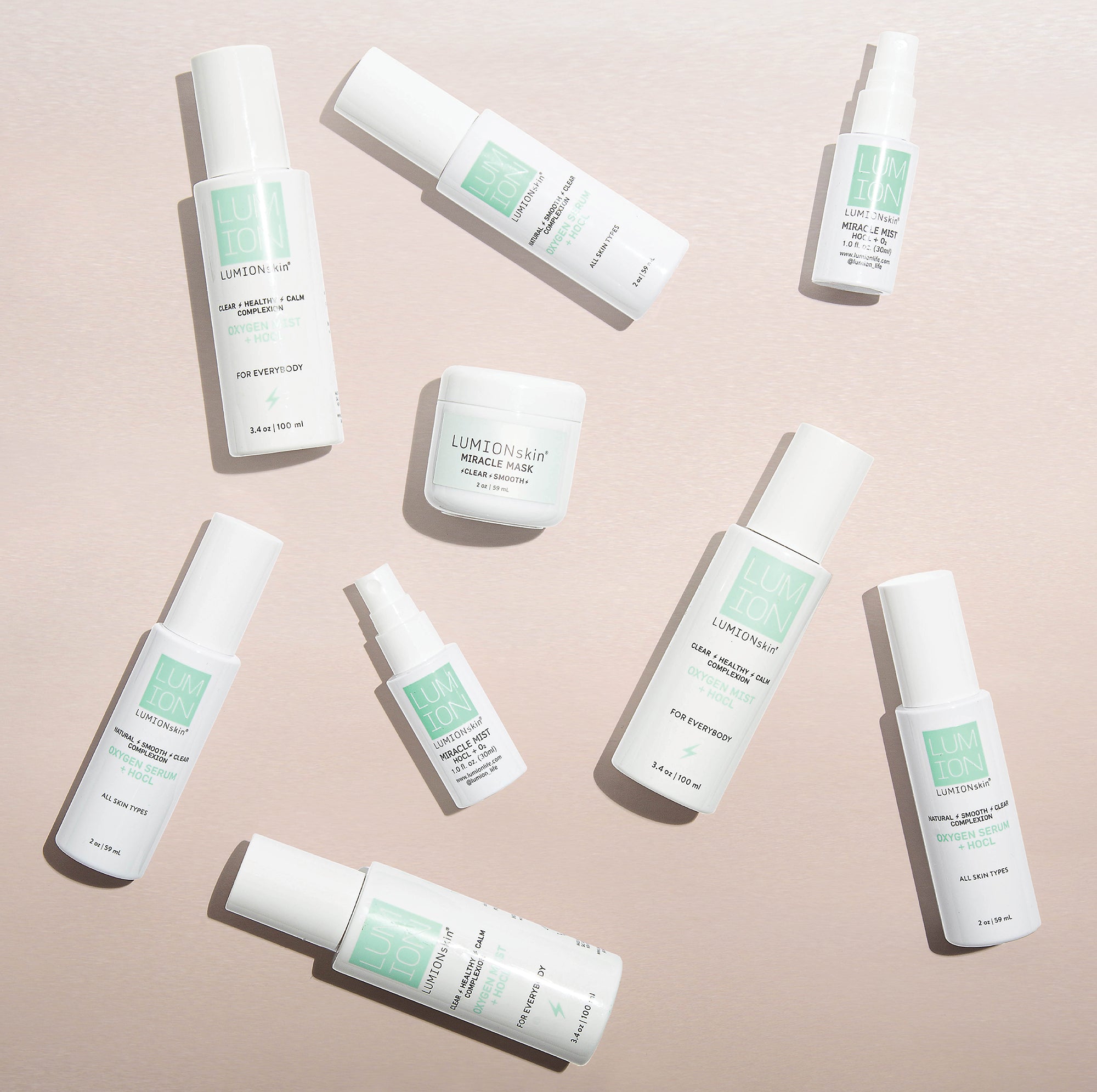
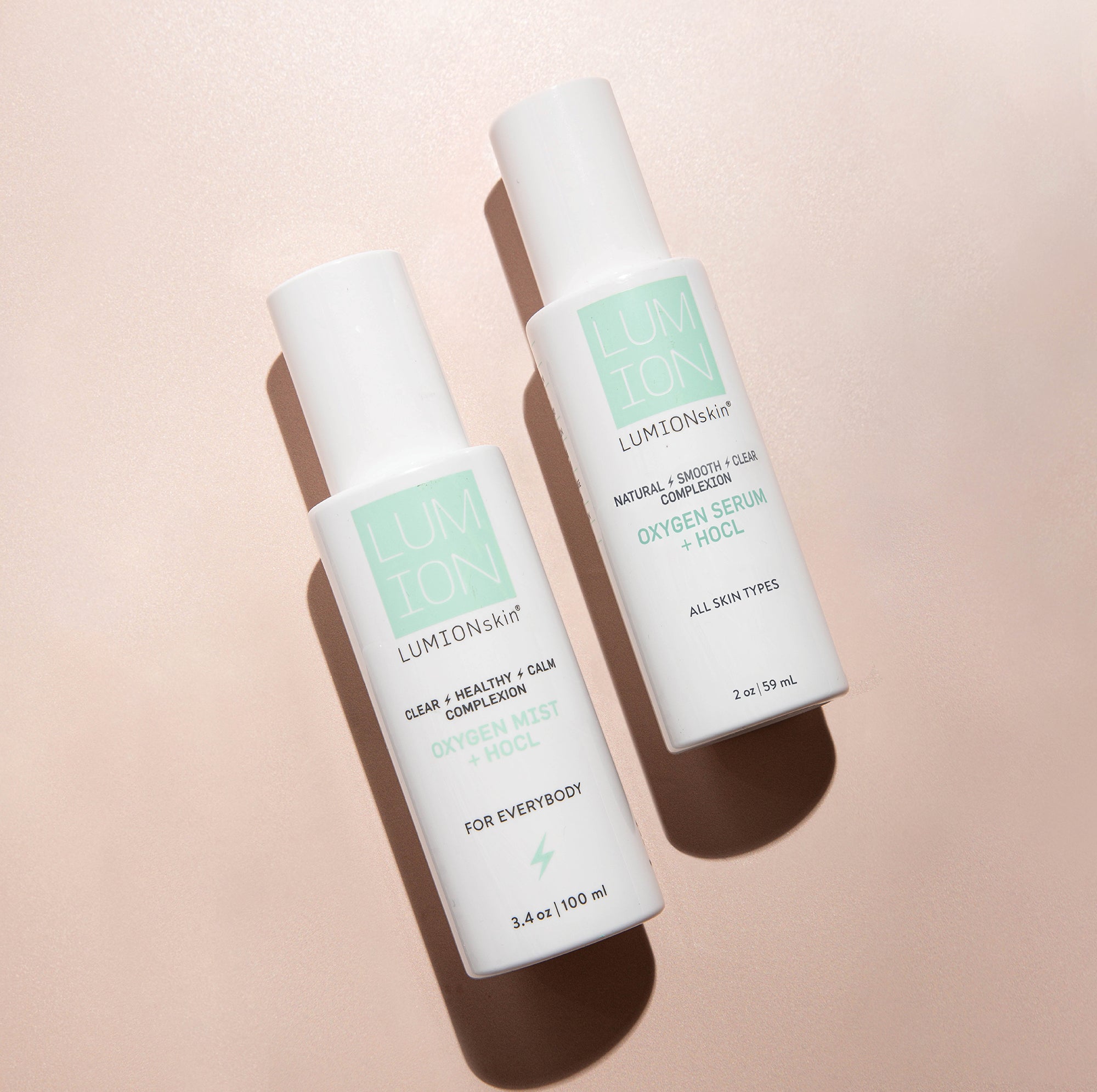
Our HOCl is sourced from an FDA-cleared medical manufacturer and produced through a proprietary stabilization process that keeps our formulas effective for 18+ months without any added stabilizers. Every bottle maintains its active concentration from the first spray to the last.
In laboratory testing, LUMION skin Miracle Mist measured at 95 PPM within the first week and held at 93 PPM 30 days later — a negligible change that reflects genuine, lasting stability. The pH remained consistent at 5.5, right where your skin needs it.
That consistency matters because HOCl only works when it's actually active. A product that started strong but has degraded by the time you use it isn't delivering the results you're paying for.
Hypochlorous Acid Shelf Life: What to Look For When Buying HOCl Skincare
Not all HOCl products disclose their PPM concentration or stability data, but here are the questions worth asking before you buy:
- What is the active HOCl concentration? Look for products that disclose PPM. Transparency here is a good sign.
- What is the hypochlorous acid shelf life? A genuinely stable HOCl formula should remain effective for at least 12–18 months. Shorter than that is a red flag.
- Is it made by an FDA-cleared manufacturer? Medical-grade manufacturing standards matter enormously for a molecule as sensitive as HOCl.
- Does it contain added stabilizers? If a brand needs chemical stabilizers to maintain HOCl potency over time, it may indicate the underlying formula isn't truly stable on its own.
- What is the pH? HOCl skincare formulated for facial skin should sit around pH 5–6 — close to your skin's natural pH. Anything significantly outside that range warrants a closer look.
The Bottom Line: Does Hypochlorous Acid Lose Potency?
Yes, but it doesn't have to. Hypochlorous acid is one of the most powerful and skin-compatible ingredients in modern skincare, but only when it's active. HOCl stability depends on formulation quality, manufacturing standards and packaging—all of which determine whether what you're putting on your skin is doing anything at all.
At LUMION skin, we built our entire brand on solving this problem because the best skincare ingredient is only as good as its last drop.
Want to learn more about hypochlorous acid?
Is Hypochlorous Acid Good for Your Skin? — the science behind why HOCl works.
What Not to Use With Hypochlorous Acid — how to get the most out of your routine.


