

Hypochlorous Acid and Eczema: Your Questions Answered
If you've been researching hypochlorous acid (HOCl) for eczema, you probably have questions. A lot of them. Because when you have eczema, you don't just try things — you investigate them first. You read the labels. You Google the ingredients. You patch test before you commit.
Eczema skin has been through enough. The last thing it needs is another product that overpromises and underdelivers.
So here are straight answers to the questions we hear most.
Is hypochlorous acid safe for eczema?
Yes — and it's one of the few skincare ingredients that dermatologists consistently recommend for eczema-prone and sensitive skin. Hypochlorous acid is non-toxic, fragrance-free, alcohol-free and free of the common irritants that typically trigger reactions in compromised skin.
LUMION Miracle Mist and Save My Skin Serum are both accepted by the National Eczema Association through its NEA Seal of Acceptance™ program, which means they've been independently evaluated and recognized as appropriate for eczema and sensitive skin.
Can I use hypochlorous acid every day if I have eczema?
Yes — and most people with eczema use it multiple times a day. Unlike many active skincare ingredients that require cycling or come with warnings about overuse, hypochlorous acid is gentle enough for continuous daily use. Apply it morning and night, during flares, after workouts, or any time your skin feels reactive or irritated. There's no such thing as using it too much.
Does hypochlorous acid help with eczema flares?
For many people, yes. Hypochlorous acid can help calm the redness, itching and inflammation associated with eczema flares. Its antimicrobial properties specifically target Staphylococcus aureus — the bacteria that commonly colonizes eczema-prone skin and is known to trigger and worsen flares. By helping reduce that bacterial load while simultaneously calming inflammation, hypochlorous acid can help interrupt the cycle that makes flares so hard to break.
How does hypochlorous acid compare to other eczema treatments?
vs. Steroid creams: These serve different purposes. Prescription steroids are typically used to reduce severe, acute inflammation. Hypochlorous acid works best as a daily maintenance tool, supporting the skin barrier and calming visible irritation on an ongoing basis. Many people use both.
vs. Benzoyl peroxide and salicylic acid: Both can cause significant irritation in people with compromised skin barriers. Hypochlorous acid is gentle and will not disrupt the barrier, but rather will help soothe and calm it.
vs. Bleach baths: Bleach baths use sodium hypochlorite — a different and more irritating compound. Hypochlorous acid is a distinct molecule that's significantly gentler and safe for daily use straight from the bottle. No diluting required.
What's the difference between hypochlorous acid and bleach?
This is one of the most common questions and the confusion makes sense because bleach (sodium hypochlorite) and hypochlorous acid both contain chlorine. But they are chemically different compounds with very different effects on skin.
Hypochlorous acid is naturally produced by your own immune system. It's the molecule your white blood cells release to fight bacteria and inflammation. It's non-irritating, non-toxic and safe for daily use on even the most sensitive skin.
Sodium hypochlorite — bleach — is a much harsher compound that can irritate skin, disrupt the skin barrier and cause reactions, especially in people with eczema.
They are not the same thing.
Where should I apply hypochlorous acid if I have eczema?
Anywhere you're experiencing symptoms or anywhere your skin is prone to flares. Hypochlorous acid can be used on the face, body and scalp. It's gentle enough for the delicate skin on the neck, chest and inner arms where eczema commonly appears.
Can I use hypochlorous acid with my other eczema products?
In most cases, yes. Hypochlorous acid plays well with most skincare ingredients and can be used alongside moisturizers, barrier creams and prescription treatments. Apply it to clean skin first, let it dry, then layer other products on top.
That said, there are some ingredient combinations worth knowing about. For the full breakdown, read our guide: What Not to Use With Hypochlorous Acid.
How long does it take to see results?
Everyone's skin is different, but many people notice visibly calmer, less reactive skin within the first few days of consistent use. For longer-term improvements in texture, clarity and flare frequency, give it a few weeks of regular use. Consistency matters more than quantity — using it daily will always outperform using it occasionally.
Which LUMION products are best for eczema?
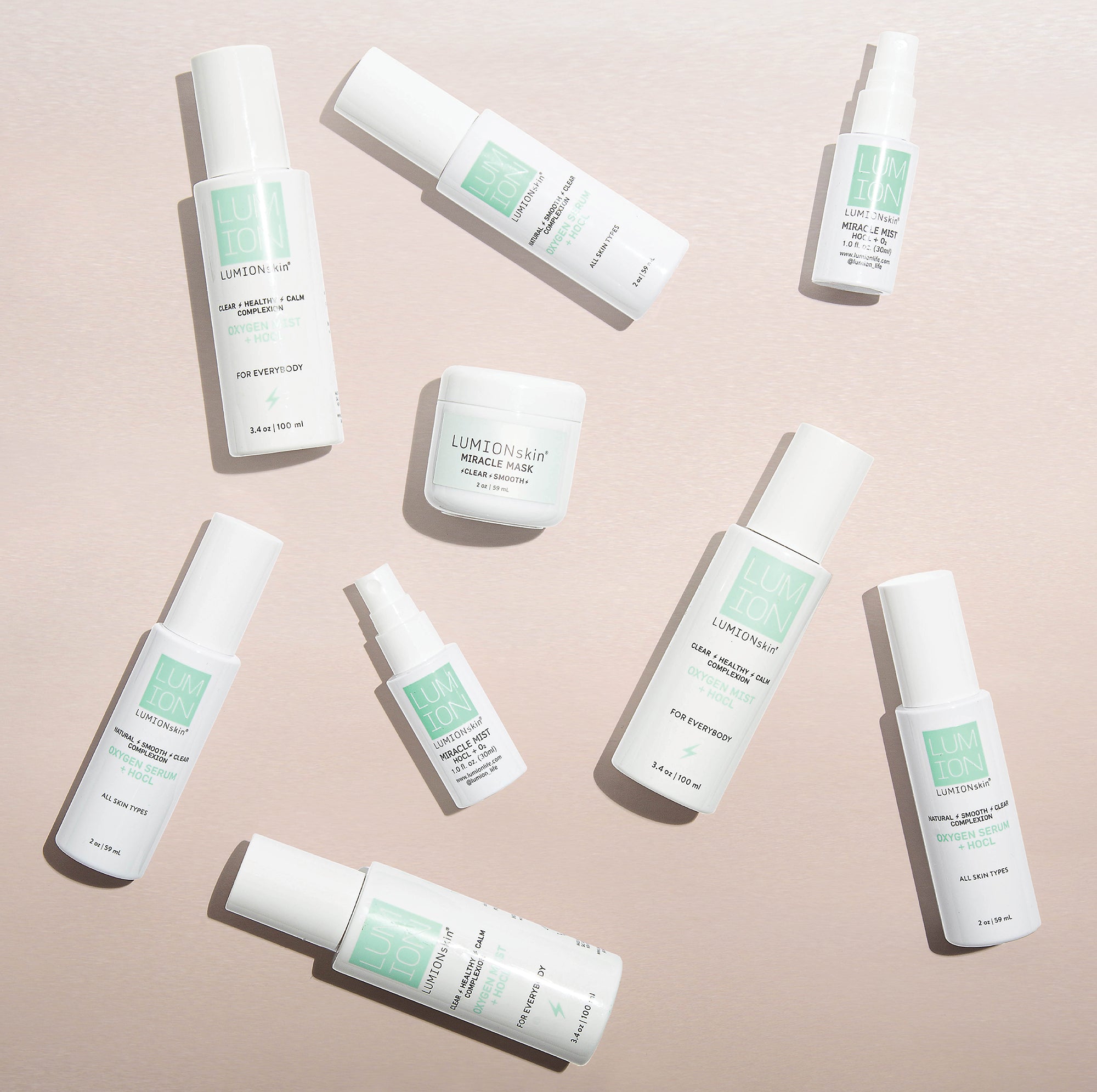
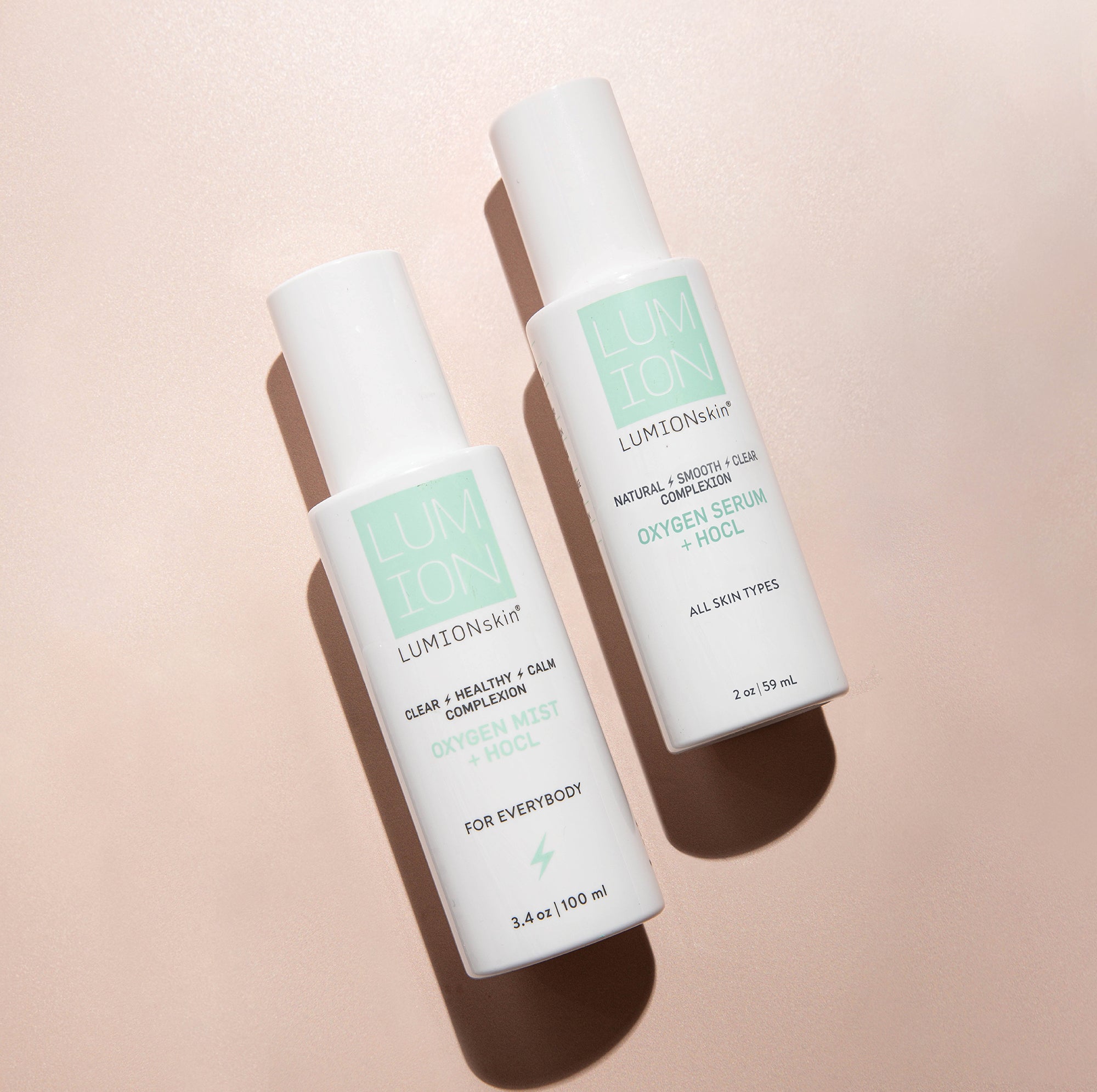
Both LUMION Miracle Mist and Save My Skin Serum are National Eczema Association Accepted and formulated for sensitive, eczema-prone skin.
LUMION Miracle Mist is the everyday essential — mist it on clean skin morning and night, during flares, after workouts or any time your skin needs calming. It absorbs instantly and can be used over or under makeup.
LUMION Save My Skin Serum goes deeper — apply it after cleansing and before moisturizer for targeted support and visible clarity over time.
For the best results, use them together. The Daily Reset Bundle combines both and is the easiest way to build a consistent routine for eczema-prone skin.


