

Hypochlorous Acid for Eczema: Does It Actually Help?
Anyone with eczema knows the cycle. You find something that sounds promising, you try it and your skin either doesn't respond or responds in the worst possible way. You’ve spent countless hours researching ingredients and loads of money on creams, gels and serums that provide zero relief.
So when you hear about hypochlorous acid (HOCl) for eczema, it's fair to be skeptical. Another ingredient. Another claim. Another thing to try.
But this one is a little different. Here's the honest, no-fluff answer to whether hypochlorous acid actually helps with eczema and why so many people with sensitive, reactive skin are making it a permanent part of their routine.
But First, What Is Hypochlorous Acid?
Hypochlorous acid is a molecule your own immune system naturally produces to fight bacteria and inflammation. When your white blood cells detect a threat, they release hypochlorous acid as part of your body's first line of defense.
In skincare, hypochlorous acid is produced through a process called electrolysis — essentially running an electrical current through a saltwater solution to create the same molecule your body makes. The result is a gentle, non-toxic antimicrobial that works with your skin's natural defenses rather than against them.
Why Eczema Skin Is Different
To understand why hypochlorous acid may help eczema-prone skin, it helps to understand what makes eczema skin different in the first place.
Eczema — also known as atopic dermatitis — is characterized by a compromised skin barrier. When the barrier is damaged, moisture escapes and irritants get in. This creates a cycle of dryness, inflammation and itching that's hard to break.
Eczema-prone skin is also more susceptible to bacterial overgrowth, particularly Staphylococcus aureus — a bacteria known to trigger and worsen flares. This is why so many eczema treatments focus on controlling bacteria while calming inflammation.
What the Research Says
Clinical studies have consistently shown hypochlorous acid’s potential benefits for eczema-prone skin. Dermatologists have long used it in practice to reduce bacterial colonization, calm visible redness and irritation, and support the skin's natural healing process.
A review published in the Journal of Integrative Dermatology confirmed hypochlorous acid’s applications in treating atopic dermatitis, citing its anti-inflammatory, antimicrobial and immunomodulatory properties. A 2025 review published in Biomedicines further supported the role of hypochlorous acid in treating atopic dermatitis alongside other skin conditions.
Why Hypochlorous Acid Works Well for Eczema-Prone Skin
It targets bacteria without stripping the skin. Unlike benzoyl peroxide or salicylic acid — which can cause irritation in people with compromised skin barriers — hypochlorous acid is gentle enough for daily use on even the most sensitive skin.
It calms visible redness and inflammation. Hypochlorous acid’s natural anti-inflammatory properties can help interrupt the itch-scratch cycle that makes eczema so difficult to manage.
It supports the skin barrier. Rather than disrupting the microbiome, hypochlorous acid helps restore balance — helping reduce the bacterial overgrowth that can trigger flares while leaving the good bacteria intact.
It's free of the things eczema skin hates. No alcohol. No fragrance. No parabens. No dyes. No phthalates. No gluten. For skin that reacts to everything, that matters.
NEA Accepted: What That Means for You
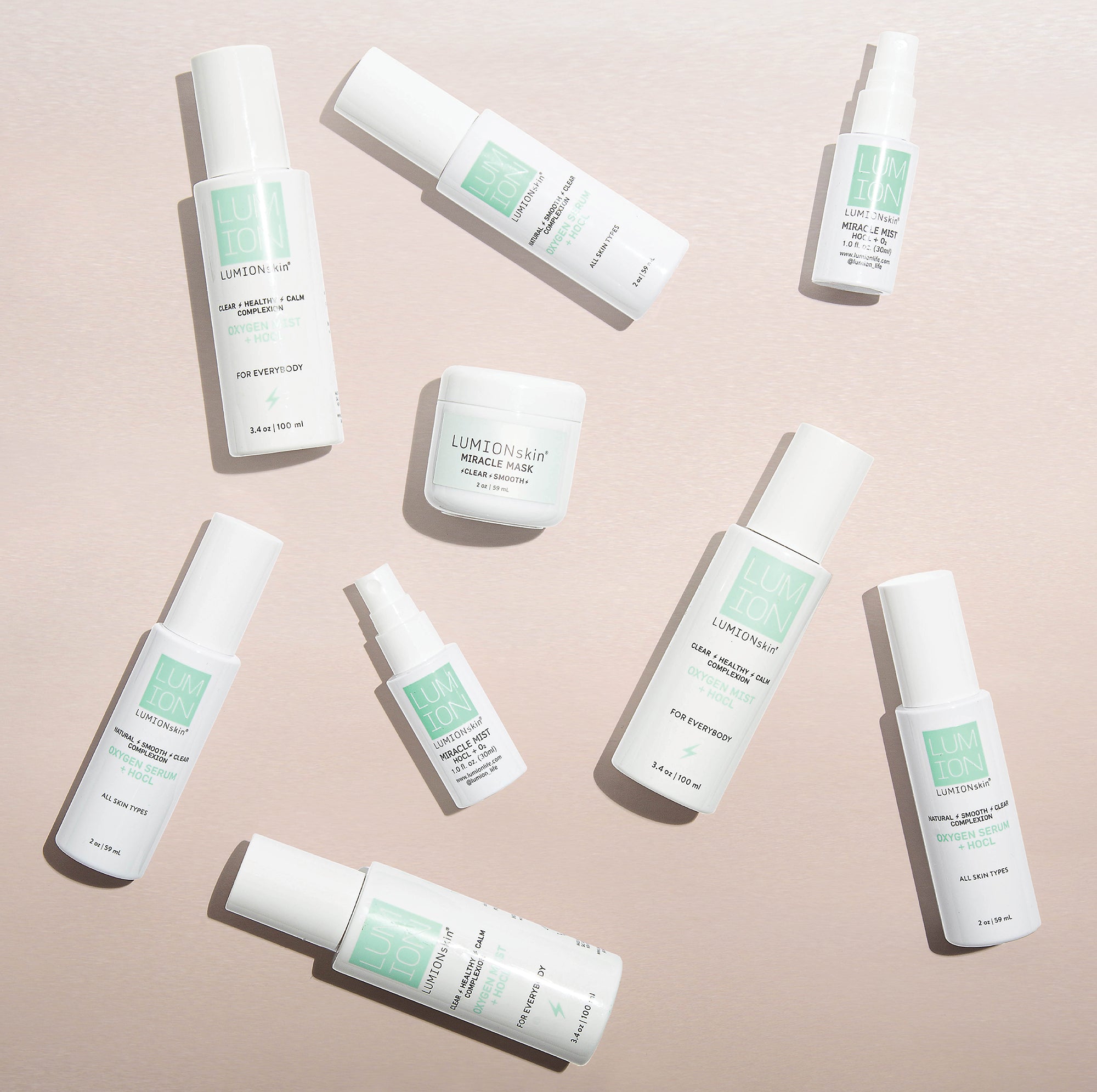
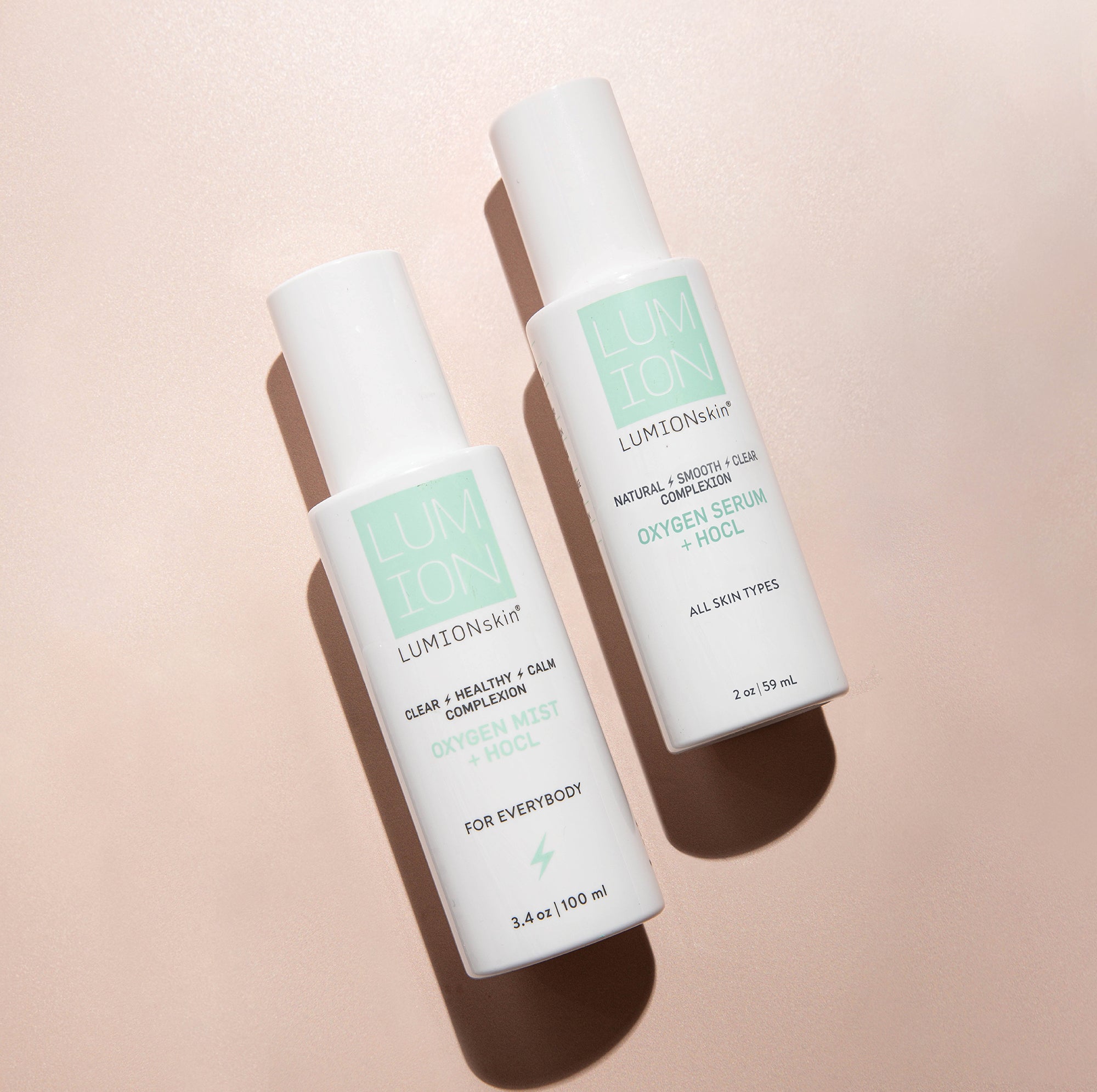
LUMION Miracle Mist and Save My Skin Serum are both accepted by the National Eczema Association through its Seal of Acceptance™ program. This means they've been evaluated and recognized as appropriate for eczema and sensitive skin.
For anyone navigating eczema, that seal isn't just a badge — it's a meaningful shortcut through an overwhelming amount of options.
How to Use Hypochlorous Acid if You Have Eczema
Start simple: Spray LUMION Miracle Mist on clean skin morning and night, and any time skin feels reactive, itchy or irritated. You can use it before or after moisturizer, over makeup, after workouts and during flares. You can't overuse it.
For more persistent concerns, layer the LUMION Save My Skin Serum underneath your moisturizer to support the skin barrier and promote visible clarity over time.
The Last Word
Hypochlorous acid is not a cure for eczema, but it is one of the most well-tolerated ingredients, It’s skin compatible and non toxic, making it a great choice to help manage flares, calm redness and quell the cycle of irritation that makes eczema so exhausting.
If your skin has been through a lot, it deserves something that actually works with it — not against it.
If you want to try LUMION Miracle Mist or Save My Skin Serum you can shop them separately or save when you buy the Daily Reset Bundle.


